
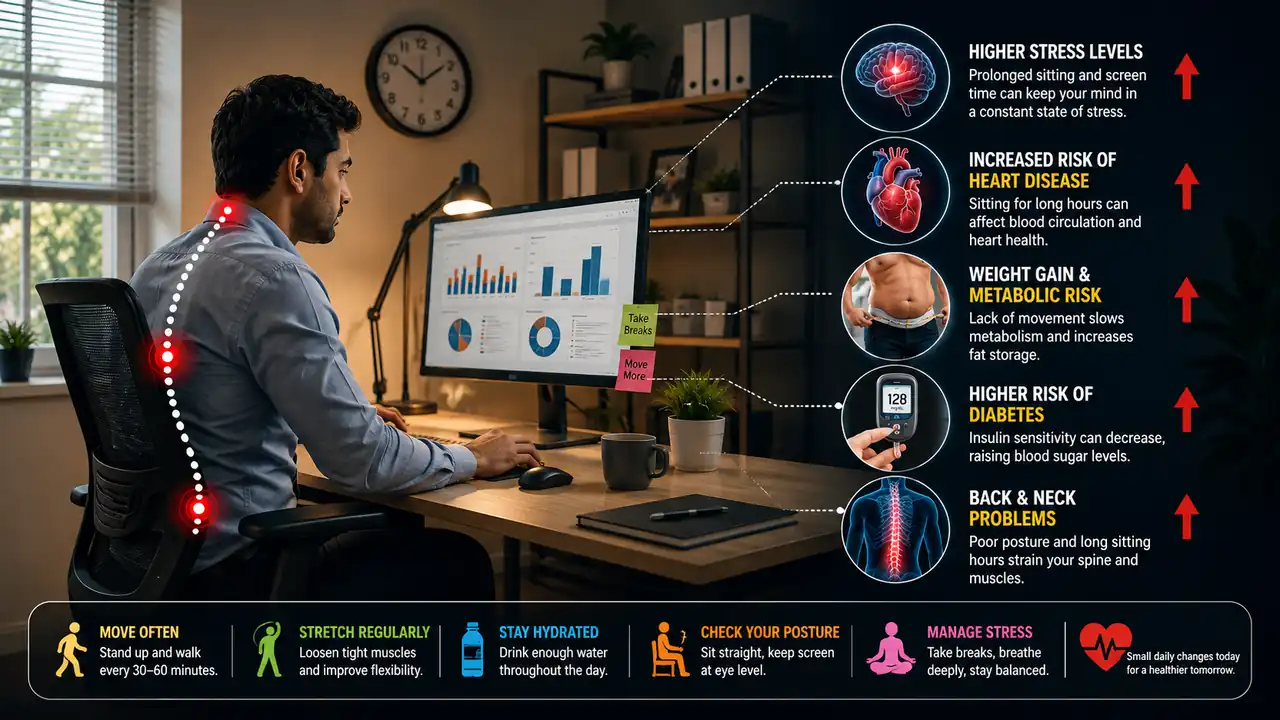
You look up from your laptop, and somehow four hours have passed without leaving your chair. The commute was by car, lunch got delivered, and that evening walk got pushed to tomorrow again. It may not feel significant in the moment, but routines like these can shape your health over time. Across India, this pattern of sitting more and moving less is gradually changing the kinds of health concerns people are dealing with and the way they approach healthcare.
Why Are Lifestyle-Related Health Concerns Becoming More Common?
Daily routines have changed.
Work has become more screen-based, travel often involves less walking, and convenience has reduced the need for physical movement.
Over time, lower activity levels may contribute to health concerns such as:
- High blood pressure
- Type 2 diabetes
- Weight gain
- Joint discomfort
- Sleep-related issues
Lifestyle-related health concerns are becoming more common, and daily habits often play a role in how these develop over time.
The shift is not always immediate. That is what makes it easy to miss.
What Does a Sedentary Lifestyle Look Like in Real Life?
It is not only about skipping workouts. A sedentary lifestyle often looks like:
- Sitting through long work hours
- Spending evenings on screens
- Taking fewer walking breaks
- Driving short distances instead of walking
- Staying inactive between meals
These habits may seem harmless on their own, but over time, they can affect how the body functions.
For many working professionals, this has become the new normal.
How is This Changing Healthcare Needs in India?
Healthcare is no longer only about treating sudden illness.
There is now a growing focus on:
- Preventive health check-ups
- Regular screenings
- Ongoing medication
- Specialist consultations
- Long-term health monitoring
This means healthcare spending is becoming more frequent, not only occasional.
For many families, routine health-related costs are now part of everyday financial planning.
Why Does This Change How People Look at Health Insurance?
As healthcare needs become more regular, many people are paying closer attention to how they plan for medical expenses.
A health insurance policy may help manage certain healthcare costs, depending on the policy terms, conditions, and chosen benefits.
Some people also consider an individual health insurance policy, which offers cover for one person based on the selected policy structure.
This can become relevant for younger adults too, especially as lifestyle-related health concerns are being identified earlier than before.
Reviewing the policy wording carefully is important before making any decision.
Can Small Daily Changes Still Make a Difference?
Yes. Small habits can still create meaningful changes over time.
Simple steps like:
- Walking after meals
- Taking short breaks between work
- Stretching during long sitting hours
- Using stairs more often
- Reducing screen time before bed
can help increase daily movement.
It does not have to be drastic. It just has to be consistent.
Conclusion
Most sedentary habits do not feel harmful while you are living them. Skipping a walk, sitting through long workdays or pushing movement to later can easily become routine. But over time, those patterns can shape your health. Staying aware of that and understanding where individual health insurance fits can make it easier to plan ahead.